demery
·

When the great man or woman hears of the Dao, they learn as much as they can and take all that is useful from it. When the average man or woman hears of the Dao, they do it hit or miss and get a few things from it, but much less than they could have from it. When the fool hears of the Dao, they laugh and deride it and get nothing from it and remain unchanged. If the fool did not laugh, it would not be the Dao.
Lao Tzu, Dao te Ching
One of the key concepts argued for on this site is that the fine art photographers have in recent years repeatedly sold themselves short. They have wrongly allowed themselves to become the valets of various political ideologies and depersonalized group identities and not realized their true potential. They have disempowered themselves and the field. Too many curators have also gone along with this diminishing of the field, not fought back against this mistaken tendency, and also at least indirectly contributed to this disempowering. These mistakes in turn seep into broader culture and photography in a thousand ways.
Placing ideology and group identity first misses what should be the deeper essence of photography — the harder path of trying to reconcile the ideal with the real and the activity as being far more than simply popular culture or a political ideology. That fine art photography can be a Dao to use the Daoist term or a Do to use the Buddhist term — a way of life.
The funny thing is I spent many years observing the corridors of power in my day job and the real political power and economic power types, whatever their political allegiances across the political spectrum, laugh at the fine art photographers who think they’re doing politics. I’m sure they laughed at the great poet Wordsworth when he came over to join the French Revolution, and they laughed at the nonetheless in some ways artistically significant Constructivists with their ideas of making the factories in Russia after the Revolution into art sites. I am personally no fan of Communism but one can almost imagine Lenin, the author of the April Theses, which led to a revolution and ultimately extreme collectivism, breaking out in howls of laughter behind the scenes when he heard of Tatlin’s more grandiose Tower designs whatever he might of said publicly. The powerful might even be laughing right now behind the scenes at many of the politically correct artists. The principle of power and the principle of art are actually extremely different principles.
Don’t get me wrong. If you’re a photographer and want to also do politics, by all means as a citizen make your beliefs known. Nothing inherently wrong with that and more power to you, as they say. But if you think being a political “fine artist” is taken seriously by anyone who is about power first and foremost you’ve got a lot to learn and are hopelessly naive. Maybe you can impress your friends or your narrow art clique with the political art identity stuff. You can do simply some kind of actual documentary photojournalism for news articles or like Aaron Siskind did for a while do more sociological documentary photos before he gave that up to become an Abstract Expressionist, and that can be taken seriously at least if introspective in its own way. But real power in the world couldn’t care less what you do as a “fine artist.”
You can of course do serious graphic design, and all political parties of every variety need posters, and things like murals or advertising. The Constructivists were great at that and introduced many graphic innovations. Again nothing wrong with that per se and it might possibly make a political difference for whoever you support. I’m sure Lenin did care about his political pamphlets and posters, but not at least in the long run Constructivism’s grand designs or concepts per se. Socialist Realism after all won the day from a power standpoint and that like all forms of collectivism had no real place for the individual artist. Perhaps you will even become a famous graphic design artist. But I’m talking about fine art here. Neither Wordsworth nor the Constructivists were important for the trajectory of fine art because of their politics in that regard, they were creatively important on the contrary in spite of their more ambitious political machinations which were in many cases naive, debatable, and in some ways highly misguided. They may have thrown out Kandinsky from their midst for being too spiritual, but Kandinsky was ultimately the much more important fine artist in the long run.
Now, you could as an artist create an autonomous sphere for, in this case, fine art photography. You could take Kandinsky’s more spiritual path instead. That could have some real weight and actually in some ways threaten power. If you emphasized the great artist doing creative deeds, the individual, wonder towards the world, deeper creative expression, and the ideal, that could have some real effect artistically far beyond politics and narrow partisan group identity. Power would have to take notice of that! It’s a deeper principle that transcends power. Some of the most powerful banks in the world still have in their headquarter lobbies famous Abstract Expressionist paintings by artists who created for themselves in some cases just such an autonomous creative space. If the powerful still laughed at the artist in these instances, they would not be right but would become instead the fool deriding what was in certain key ways more than them. Power is only a more important principle than fine art when fine art loses its way and tries to become not about art but power.
But let’s get back to the Dao or Do, the idea of fine art photography as a deeper way of life. Unlike in the current era, the Modernist photographers, or at least some of them, deeply believed in fine art photography not as a Post-Modernist game, all surface and no depth but as a deeper way of life. They didn’t fit in with the depersonalized group. They understood that to realize this way of life, art would have to be very different than politics and not about simply group identity. In some cases, they had been in the super-politicized WPA and grown tired of doing “worker murals” art, so to speak. A worker’s glove on a wharf somewhere expressing a deeper interior and individual meaning was far more fascinating to them than endless art as group propaganda. They got on that quest, that path, that Dao or Do to discover a deeper realm for fine art photography.
In this age of endless superficial images a mile wide and an inch deep such a path may seem almost incomprehensible and way too serious. The games of “narrative” originating in lit-crit faculties of Ivy League English departments from second tier scholars pretending to be revolutionaries after failing terribly at that game in Europe have replaced the more serious work of real thinkers. More’s the pity both for the fine artists and the field and even politics itself.
But here’ s the deeper point. Through much effort, and thought, and hard work these earlier Modernist pioneering fine artists and photographers, figures like Aaron Siskind, Keld Helmer-Petersen, Harry Callahan, Ernst Haas, Eliot Porter, Imogen Cunningham, and Brassai, to name just a few, discovered a series of key principles, which allowed potentially at least for fine art photography to be a deeper way of life. They were not always or even in the main simple principles, even though sometimes they simplified them for the public. They were honestly principles any serious fine art photographer hearing about should want to learn and then apply in their own work at least to some extent. They were a kind of creative gift available for anyone with a camera. These artists stood up against the depersonalized, politicized group and tried to do a deeper art based on such key concepts, which they knew from long experience mattered greatly. They had a Dao or Do and lived it.
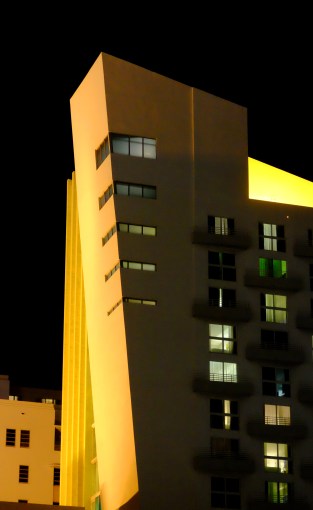
Over the years, many of these key principles have been both misunderstood and ignored. Fine art photography has lost its way in a deeper sense. The goal of this site is simple enough. It is to try to share with the reader some of these principles and illustrate many of them in the efforts of a new style, Creative Abstract Design, to use these ideas in practice. The site’s goals are even, among other things, to suggest the possibility that fine art photography can become a Dao or Do again and base itself on deeper and less superficial approaches.
Some among you when you hear about these ideas may, as I know I did years ago, try to make them your own. As a true individual some of these ideas will work for you and others may not. Know that. Take what is useful and discard the rest. Perhaps, confronted with these ideas it will even confirm that a different path is for you, although I doubt if none of it will prove useful. But as a serious fine artist you will want to master them and then decide how to make use of the concepts. That’s the important point.
Others of you will simply not have the desire to fully get on the path of deeper fine art photography. Still, the world is an interesting place and whatever tendency you have to simply view photography in the more limited terms of the depersonalized group will be moderated. That is not a bad thing at all. The world would be a far more creative place if even a little bit of the Dao or Do of such creative art had more of a toe hold and general understanding. Even many photographers who end up taking the art seriously start off much more tentatively. Nothing wrong with that and whatever you do these ideas will give you a leg up.
But some artists and members of the public hearing about this earlier work and its possible revitalization and significance for today will not be happy at all. Having bought into hook, line, and sinker fine art photography in the manner desired by powerful interests and the depersonalized group they will simply deride these points. They will view them from the vantage point of group power not art. They will consider them just noise or the musings of a bygone era or worst still consider them just about power by other groups than their own. They may even act very clever and pretend they have all kinds of up-to-date ideas and sophisticated theories this earlier way of life did not have, while not understanding the deeper ideas at all and substituting Post-Modernist surface narrative and ideology for Modernist theoretical truth. Perhaps, they have even important insights, but they will not take these questions facing the field of fine art photography seriously enough or do even an average amount of work at understanding to engage in a deeper discourse. They will, in other words, laugh at the whole idea of a Dao or Do for photography. Because they are part of a depersonalized group, they certainly will not want to hear that they lack individuation or understanding. This will especially be the case with some curators whom have their own very limited entrenched interests that have nothing to do with fine art. They will when they laugh feel very important, even though they actually are not important in any deeper sense based on actual content at all. With their laughter they might be giving up an alternative that would be genuinely empowering in artistic terms. They will laugh.
However, as Lao Tzu said so many years ago, if they did not laugh, it would not be the Dao. Enough said for now. We will have much more to say about this potential Dao or Do for fine art photography in future posts.
If you are interested in some of these ideas you might want to view my Kindle reprint Creative Abstract Design:Towards a New Modernist Photography for the 21st Century available on Amazon.