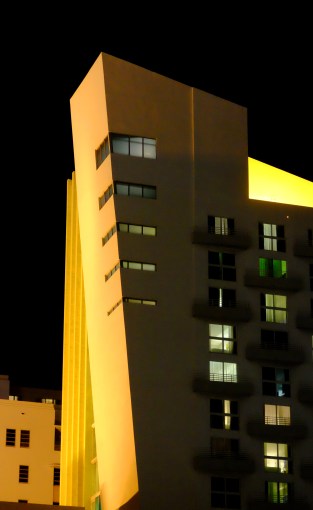
There is at the moment lots of photographic art being made some of it superb and some more mediocre. Of course, there is work that is even quite innovative, but at least in one respect it tends overall to be quite mundane. When the work tries to escape the mundane, it usually turns into mere spectacle. Overall whether spectacle or mundane, there is very little sense in the majority of this art of what might be called conceptual possibility. For those of us with a higher-level background in philosophy and theory this is obvious. Alas, many photographers have no idea this is the case—more’s the pity for the field. There is let us say by shorthand a middle class taken for grantedness as to what a photograph can be, a kind of routinized predictability suggesting an aversion to risk taking conceptually. Not in all the work being done, exceptions, excepted, but in far too much of it. It was not always so that the artist was so chained in the cave in this way, and hopefully it will not be the case again before too long.
Creative Abstract Design is in revolt against this taken for grantedness. If there is one idea the reader should get above all else about the style championed on this site, it is that principle. There are many ideas that will need to be considered before the revolutionary nature of this return to the Modernist potential of fine art photography can be even partially understood, but by way of introduction this alternative to the mundane is, to a great extent, a matter of how the artist practices the making of art, a certain innovative style of working. While most fine art photographers who have lost this primary principle view photography in terms of the classic categories of landscape, portrait, documentary, still life, and the like and enter a particular space and search for these conventional images, the Creative Abstract photographer must work in a very different way. In contrast to the usual categories, the setting where the image is made is seen as a very free space in which the artist takes the found objects within that space, which often, but not always make up a much smaller part of the whole, and creatively abstracts and designs with these objects in a very open-ended fashion. The mundane is defeated by non-determined freedom. What could be simpler and at the same time harder than that. Contradiction on top of contradiction—the opposite of ideology.
Within this space, where certain interesting combinations of objects are found, the photographer explores and makes their own unique image. Now, sometimes this can be done on a vast scale, as long as that scale conforms to these principles of being reducible to an area that can be played with in this abstract fashion, but the space regarding the whole can also be quite small. If it is a natural setting, for example, it could be a combination of objects such as rocks and water, the form-fullness of tree branches or flora, or the vast wall of a cliff; if it is more urban, a wall covered with graffiti, neon lighting or tall skyscrapers juxtaposed against the sky or each other– key elements that can be abstracted and from which a design can be created. Along with these more direct abstractions the style can also play with to an extent, increased abstract design aspects within conventional fine art approaches. For example, a boat or several boats or ships on a vast sea or isolated in abstraction, a bird on a tree branch against a blue sky or at the moment of flight or activity, an abstract wave and rock within a broader waterfall or ocean coast photo. A cityscape emphasizing the abstract design aspects of what would otherwise be a more conventional architectural photo. Creative Abstract Design thus starts with this principle in the majority of its work and then applies it across a wide expanse between more specialized and conventional fine art and various photographic mediums. Thus, the style is always applied expansively not narrowly.
However, the point is more than simply certain kinds of items that can be potentially abstracted, that would hardly be the revolutionary change we are talking about here—it is nothing less than an entire attitude to the objects within the space—the freeing them up from their set meanings and an initial de-contextualization. Aaron Siskind, a key precursor of the Creative Abstract Design style and himself an important figure in the original Abstract Expressionist movement, pointed to this novel relationship of objects thus potentially created when he argued in his 1950 Credo that the objects within the space of the photograph to be created by the artist can actually be dramatically removed from their actual broader scenic setting. This is accomplished by emphasizing the specific independent relationship between the objects which have been ripped out of their original context to establish a new connection within the frame or what we call in this style within the bracket.
Thus, in Creative Abstract Design photography the point is that the initial confrontation with the found objects is de-contextualized. Ultimately, in the actual image the degree of association or disassociation with the setting is always an open question, and the style allows a wide degree of creative possibilities, but the key is that the objects are played with in this much more unspecified creative manner in which extreme de-contextualization is always an option unlike in most conventional styles.
Although all fine art photography includes some work that might be described as fitting the criteria of the style, it is Creative Abstract Design’s willingness to explore this theoretical approach as a central and overarching creative starting point that makes the approach in key ways unique. Hence, the photographer is often taking photos where no one else is looking, considering brackets that allude the casual observer working in any of the more established categories. There are no set rules or limits as to how the found objects in a setting can be brought together and worked with.
For photographers used to more conventional approaches, this can be a very liberating or offsetting experience. Freedom of artistic expression especially in an ideological world may not be easy to even recognize. But this approach with its almost complete freedom to compose art from any of the details of the world finds itself with unlimited possibilities for creating unique brackets and expressing one’s own specific perspective in various settings. This is a very different means of working indeed from a great deal of conventional fine art photography at the present moment with its heavy documentary and group ideological emphasis. And in this revolutionary style argued for here, this is not an additional aspect occasionally pursued but central to the entire method. It is a core and radical principle through and through.
It is also a matter of certain key concepts that, as implied by the name, have to do with the combination of abstraction and creative design dating back to that cultural spark of Abstract Expressionism. For this form of photo art, both aspects are essential. Whatever the particular bracket explored, whatever the found objects that make up the image, no matter what the scale or form, it is always relative to its inherent artistic possibilities abstracted. When I say abstracted, I mean that it is presented in a way where the various items become delineated on their own terms within the space of the image or at least an important part of the image. They become highlighted, underscored, brought to the surface as key aspects of the photo. Even if subtly presented, their primacy is obvious. While a Creative Abstract Design photograph may potentially be very unclear as to its exact subject matter, especially in terms of more conventional categories given its potential de-contextualization, there should be nothing obscure about the objects abstracted in the image as design elements.
The second key principle is that the photographer takes these highly abstracted aspects and creates some design order of their own making from them. From a practical standpoint a bracket is found, the key elements discovered or defined, and then a creative order produced. Again, as with abstraction, this design organization, whether subtle or bold, is not obscure. An order is imposed even if contradictory, in some cases also purposefully containing disorderly elements, or even added to more conventional approaches. Hence, the key aspect stated in a negative manner, which makes the point: If a photo does not contain a high level of abstraction and creative design order, it is not a Creative Abstract Design photo.
All of this is, of course, a matter of degree– all photographic art as suggested contains a certain amount of abstraction and design and the style does venture into more established fine art subjects often enough—but what we are talking about here is a fine art photographic approach where these aspects are totally crucial. Part of this principle, and this is not a one hundred per cent rule, but it is usually the case, is that to make a Creative Abstract Design photograph—to create a sufficient degree of abstraction and design order, to make the bracket work, the image is often flattened in its presentation or as with de-contextualization at least initially considered from a design perspective in such terms. In the actual image created, even when the scale of the found objects may be enormous, usually rather than emphasize depth of field a more flattened perspective is highlighted. In a non-ideological art like Creative Abstract Design there are important exceptions to this principle, but this is often the case.
It is this conceptual freedom and room for experimentation it gives the photographic artist in actually exploring the real objects of the world that is one of the most interesting aspects of the style. If the photographer is someone who requires a very structured and conventional discourse for their art, if they view it in the traditional sense of being an activity one slaves away at year by year perfecting like a classical painter their brush work within extremely narrow confines, they will be overwhelmed by this approach. Literally any corner of the world, although obviously some corners more than others, can be a fascinating space for the making of Creative Abstract Design photography and the brackets are only limited by the creative imagination of the artist and the effort they bring to the task.
On the other hand, equally distinctive is the fact that with freedom comes the need to create order. The Creative Abstract Design style also requires that the artist take very seriously determining a form out of these vast choices of brackets. Even though the possibilities are virtually endless, the photographer must take even more seriously than is usually the case forging an order with their work, and this includes specifying, in a distinctive manner, place and message. Without a strong design imposition of this sort, the artist’s work will not rise to any acceptable level in the style. This will be found rewarding by the artist who enjoys making a creative organization. The artist who simply views fine art photography as a rebellious, unstructured activity and seeks novelty alone as the basis of their art will get no further with this style than the artist who defines art as a long classical training.
Another important point, which will be discussed in later posts, but needs to be alluded to here, is the fact that this approach combines two aspects, which are sometimes set off in extreme opposition in Abstract Art. Often in Abstract Art the process of creating a design order is seen as antithetical to the including of aspects of the figurative or natural representation of objects. However, in Creative Abstract Design it is precisely the forging of a link between actual found objects and abstract design that is central and some of the most noteworthy practical and conceptual questions involve working out the relationship between the found object and abstraction. It is also why a Creative Abstract Design photo is very often distinctive but can upon occasion overlap sometimes conventional fine art styles. The object so to speak gets a vote and what ultimately matters is the power of the image on its own terms.
If you are interested in some of these ideas be sure to check out the new Kindle reprint Creative Abstract Design:Towards a New Modernist Photography for the 21st Century available on Amazon.


[