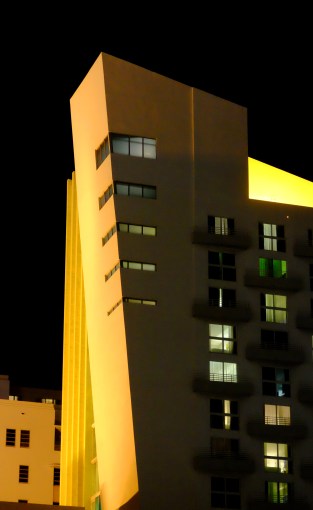
In an earlier post I discussed the message in relatively straightforward terms as a third order bracket specifying the particular relation of the Creative Abstract Design photographer to place in terms of the series. But there are also more general higher- level questions that concern the new Creative Abstract Design Style of fine art photography I’m advocating. In a style as free as that of Creative Abstract Design photography, there are no set rules for these kinds of topics but these are message dimensions that I have found very important and in their own ways potentially revolutionary for this kind of art.
The need for beauty
Beauty defined in the usual conventional understanding of the term is not a particularly pertinent concept for Creative Abstract Design photography and like the conventional rules of design discussed in an earlier post does not apply or hold up very much in the style. However, the idea of aesthetic accentuation defined in a more personal manner is indeed central. The very effort by the Creative Abstract Design approach to abstract and to create an aesthetic order implies a belief in beauty, that it is possible in the approach I am arguing for, to take the found objects of the world and at least to a large extent idealize them, not to simply diminish, tear apart or document them. In other words, inherent in this style is always a certain fundamental belief in the power of creativity and the possibility of aesthetic accentuation and cultivation. Thus, the radicalness of Creative Abstract Design lies not only in the free play of the bracket but also in the revitalization of aesthetic idealization at a deeper level.


In this emphasis, the Creative Abstract Design style runs counter to the general approach of the New American Color Photography. As we are defining it here, this is a style championed by William Eggleston and Stephen Shore among others, which emphasized a documentary realist aspect and celebrated a vernacular and very banal presentation of everyday life. It is sometimes said to begin with Eggleston’s 1976 color photography show at the Museum of Modern Art and in the case of Shore with the publication of his work Uncommon Places in 1982 in which color photography supposedly became accepted for the first time as a serious fine art medium.
In the case of Eggleston’s work, he portrayed images of settings in the deep South of the U.S. including everyday people, shopping malls and such things as interiors and road signs in a very mundane and disenchanted way. While some of his images where color, abstraction, and aesthetic design are more central would fit the criteria of Creative Abstract Design art and move away from the banal, virtually all his other images are presented in a very non-idealized more documentary albeit still highly subjective manner. This is a crucial difference: Creative Abstract Design presents the found object in a much more accentuated manner that celebrates and highlights the potential aesthetic beauty of these objects and a certain wonder towards them, whereas with Eggleston there tends to be a large degree of for want of a more complete word disdain toward these items.
With Shore, his work Uncommon Places depicts various documentary and vernacular images of street corners, mundane businesses, road signs, unexceptional interiors, and various banal still life images taken in his travels across the U.S. Again, while some of these images might qualify as Creative Abstract Design works, his emphasis on an approach which seeks not to accentuate and aestheticize but instead portrays the ordinary in a more uninspired and very nondescript manner runs counter to the style I am arguing for here. While I appreciate some of this work and there are even occasional overlaps between approaches, the style I am championing rejects this overemphasis on the vernacular and banal and maintains a much greater accentuation, idealization, aestheticization, and appreciation of the distinctive beauty and abstraction of the found objects.
It would be too strong to say that this vernacular approach is the enemy of Creative American Abstract Design, but not to say that the two styles are definitely conceptually in opposition. In fact, it is the victory of this vernacular style even to this very day in a hundred subtle ways that has ultimately set back fine art photography as a whole. I have also discussed this point at length in an earlier post. In the radical view of Creative Abstract Design while there is a place for this kind of art its dominance has been nothing less than a disaster for the progress of the medium. Wrong paths are taken and this was for fine art photography the wrong path. A former club kid from Warhol’s factory and a cynical southern aristocrat should never have been given the outsized influence they received. Still these artists were at least talented in their own space along with a few others in their style. Alas, in many cases of less serious artists working in the more vernacular style this cannot even be said of the work. In these cases, and the curators who unfortunately play along with this game, there is a tendency to substitute merely the most superficial distance of the vernacular from the glossy style of commercial work as a presumption of “artistic quality”. The result is a total conceptual lack of any deeper actual consideration of a more personal relation to art and the question of creating an artistic order in the image.
In this regard, even in Creative Abstract Design’s portrayal of the harshest objects, the starkest color, and roughest shapes they are always presented in a way that contains an aspect of aesthetic beauty and idealization. A wall of graffiti is not in this style a document of oppression or a mere sign of urban decay or even simply a mundane realist object—it is a surface of artistic possibility that can be abstracted and accentuated.


The sensual and the spiritual
If the Creative Abstract Design approach believes in accentuation and a certain understanding of beauty, it is also a style that tends very much in its message to emphasize both the spiritual and the sensual. Sometimes, there is a strong tendency on the part of artists to view these two qualities as irreconcilable. The pure artist slaving away at their work perfecting their craft as a spiritual activity dislikes the rebellious sensual artist who emphasizes the pleasure of the moment and vice versa.
Creative Abstract Design considers the spiritual and the sensual to both be crucial aspects of the style. The actual experience of found objects contains both extreme spiritual and sensual qualities and these two aspects actually compliment each other. There can be no question that the making of fine art photographs in this style can be a very sensual experience. There is a pleasure in the artistic discovery of the qualities of found objects that is central. At the same time, these items often have a deeply spiritual quality. The elements of nature, for example, are most certainly in their myriad color and shape and organic form intensely sensual, but they are also extremely spiritual.


And who can deny the sensual quality of the found objects in urban settings, which are often quite overtly erotic, but these settings also in many cases have a certain cultural spiritual quality reflecting human pursuits and the potential of the cultural environment. All of which is to say that this is an approach at the level of message that seeks to reconcile artistic contradictions. I already suggested this point with the earlier discussion of how Creative Abstract Design was an extremely free style in terms of the immediate bracket, but then also demanded creative order, and the same can be said here that this is a form of art that is very sensual, but at the same time greatly spiritual.


I will have a lot more to say about accentuation and combining the spiritual and sensual in later posts but enough said for now.
If you are interested in the new style discussed on this site please consider my new Kindle reprint book, Creative Abstract Design: Towards a New Modernist Photography for the 21st Century available on Amazon.