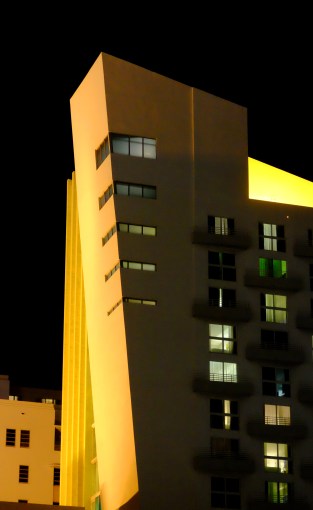
We need in our discussion of Creative Abstract Design photography and its effort to revitalize in a new form certain key aspects of Modernist fine art photography to turn now to the three key principles of the style. These are the idea of what we call the immediate bracket, the more general second order bracket of place, and the third order, broadest, bracket of the message.
Principle 1: The immediate bracket
The most important concept of Creative Abstract Design photography is the bracket and everything in this style ultimately comes back to the bracket. Now, of course, all photography involves the frame applied to the image and the selection of the best composition for the conventional scene in terms of this frame. This is strongly related in the usual photographic discourse to the focal length of the lenses used (normal, telephoto, wide angle), to the format of the specific camera (rectangles of various sizes, squares, etc.) or the cropping of the image in camera or post-production. Photo artists sometimes debate the merits and demerits of different lenses, formats, and approaches to the composition of the frame and all photographers seek excellent compositions. However, by bracket we mean here something much more than such standard understandings and a very different idea—in fact, the bracket is almost a metaphysical term in this style.
The bracket is the frame, but more than this it is the arena within which the objects that are abstracted are first selected and then worked with to create a design order. The specific dimensions of the frame per se in terms of format or the characteristics of various lenses, or making a pleasing conventional scenic are not the issue, but rather the bracket is best understood in the approach as a kind of creative space in which various objects are thrown. In choosing the specific immediate bracket, one is doing more than choosing a pleasing composition or the future dimensions of the print, one is choosing a space in which objects take on greater significance and relationships. Ultimately, the bracket is also a general choice of a certain kind of place to experiment and create art within and a message the artist wishes to communicate.
This is only to a limited extent a technical problem—it is more than this a choice by the artist of the kind of items they want in their expressive world. The bracket, as itself a creative space in which the photographer places the creative objects with which they desire to work, is a found setting, but it is also a field of desire and self.
Thus, the brackets’ initial existence is a profound, but extremely practical question for the Creative Abstract Design photographer. Now, for the conventional photographer there is no real problem to this question. Sure, they will work on the frame to place it in a manner leading to a scenic image—they will try to make a good composition in ordinary terms, but for the Creative Abstract Design photographer this entire territory is loaded with choices, levels, and meaning. It is not taken-for-granted largely like it is for the conventional photographer.
However, the bracket has even greater significance, for defining the bracket is only the first preliminary step—then the further innovative work begins. The artist must at this point specify and decide both intuitively and analytically what the key aspects of each bracket are for them and how to construct a design order from these elements. They should consider in this style not only those simpler brackets, which especially lend themselves to abstract design, but instead always be aware of the imaginative tradeoffs between range of brackets considered and ease or extent of abstraction.


Now again, this is a very different process from that of much of conventional photography and fine art photography. Any, and we mean any, aspect of the bracket can be played with and designed with in terms of the potential of the space and these choices will both further clarify and specify the bracket and how it is organized. Most conventional photographers consider the bracket as frame in relatively narrow and expected terms which lack even a modicum of theoretical sophistication—but consider, really consider, only a very partial list of the aspects within the bracket that can be readily emphasized to define a design order, and this is an extremely short list that could be easily tremendously expanded:
Relationships between colors
Interactions between the presence and absence of color
Degrees of color contrast and saturation
Tonal relationships
Figure-ground relationships
Relationships between active and negative space
Subject matter and the meaning of objects
Specific aspects of tactile plasticity
Diffuse atmospheric effects
Subjective understanding of the expressive qualities of objects
Subtle form and light interactions
Textural aspects of objects
Relationships between point and line
Weight of objects both objectively and subjectively
Geometric shapes and patterns
Interactions between contrasting textures
Objective understandings of the found items
General light effects
Specific location and time of day effects
Effects of scale
Seasonal weather effects
Artificial light especially in urban settings
Black and white tonal relationships
Conventional and unexpected juxtapositions of objects
Contrasts between emotional resonances of objects
Figure/ground relationships
Relationships between motion and sedentary qualities
Armature design issues
Transcendental aspects of objects
Relationship between transcendental and real
Interactions between form and color
Built structure
Natural objects in relation to built objects
Conventional settings redeployed in new ways through de-contextualization
Biotic semiotic or biomorphic meanings
The delineation of hidden structure
Play of form and depth on surface
Depending on the nature of the found elements in the bracket, some aesthetic characteristics and expressive qualities will be more important in design terms than others, but choosing which qualities to highlight is also always a creative question for the photographer. We will return to a more detailed discussion of how this plays out in terms of certain key aspects that run through many of these possibilities with the abstract design of the bracket shortly in later posts.
Principle 2: Place or the second order bracket
It is precisely because Creative Abstract Design is such a free style that the concept of the bracket is so important, but the bracket does not simply exist at the level of the immediate particular photo being made. There is a second level order to the bracket, and it is the principle of place—the second key concept of Creative Abstract Design photography.
One might think that because this style is not usually making classic landscapes that place would cease to be important, but for the fuller realization of the approach it becomes if anything even more important. The classic landscape photographer works to a great extent in pretty standard best locations for making general scenics whether widely understood or self- discovered. The nature photographers in Yosemite all line up to take each morning Ansel Adams’s classic tunnel view photo and hope the light is great that day. They take the landmarks in each place or if working in a more vernacular fine art style, they may look for those particular scenes that conform to their set general understanding of place. Perhaps because they do work in this more predictable way, they often compete by going to more and more exotic, less traveled locations in an effort to differentiate their photography or discover less photographed landmarks. Creative Abstract Design photography does not mainly work this way. Instead, what is being created is a space or series of spaces, which consist of a certain range of found objects that can be played with in design terms. The entire process is sufficiently open ended that if there is to be a coherence or order to the work, there must be a strong definition of place. In addition to the creative space of specific immediate brackets, a more general creative space of place must be created, which can be explored in detail and on a regular basis. This is not the epical style of moving from one grand landscape to another. All the objects within the territory defined as place are potentially workable with artistically including the more epical landmarks, but in a very different manner—as design aspects within brackets not as monuments per se.


This second order of bracket of place can be defined in whatever way the artist wishes, but it is one of the key tasks of the Creative Abstract Design photographer to do so. And to fully decide what places will be the settings for the photographer’s work, the artist must explore a lot of settings or at least decide by whatever criteria they choose their locations. Each photographer’s answer in this style will be personal indeed, and it could be virtually any accessible area. Who would think that the great photographer, Callahan, would have as inscrutable a list for example as Chicago, Providence, Rhode Island and Morocco, among the other places he photographed.
Even though in these locations few photos are conventional landscapes, the bracket of place effects every facet of the images created. Conceptually then, one starts with the immediate bracket and then the general but more defined bracket of place, and these two levels are continually interacting with one another.
Principle 3: The message/series or the third order bracket
The immediate bracket and the bracket of place are ultimately held together by the third order bracket of message/series. Now for conventional photographers the message of their art is often a much easier proposition—perhaps the spirit of a place or an ethos of nature or in some cases a political critique or commentary on mass society. It is often imported from another space and the artist becomes the servant for this broader message often defined by others.
The Creative Abstract Design photographer cannot work in such a standard way. In returning to the full potential of fine art photography they must escape this bondage to the cave and perceive the actual landscape in front of them in all its dimensions both ideal and real. The message is not something that can be taken for granted in this way. Instead, the message must be about the very personal relationship to and affinity for a certain kind of choice of objects and place. The message must come from all that the artist brings to the immediate bracket and place. Put another way, it is forged from the actual interactions making art of self and specific setting. In this regard while there are a great many cultural aspects to this creation, it could be said to be a more immediate spiritual and sensual understanding; it becomes directly connected to the photographer’s own created understanding of the setting and the immediate bracket. The artist is creating a space in which art can occur, and the message is defined in terms of that area.
All of which is not to say that the usual messages for art cannot be deployed, but rather only that this process is very open ended. Whatever the message it is highly personalized in this style. Not, for example, a spiritual value to nature as ideologically defined by the philosophy of transcendentalism, but a more immediate personal understanding of the spiritual and sensual qualities of nature. The message for this reason is much harder to realize and define than is often customarily the case. When Arron Siskind photographed Gloucester his message was not as would be the case with a traditional landscape artist a study of a classic New England fishing village and the value of the seaman’s identity or the mythical qualities of the harbor per se. No, it was a personal understanding of a place called Gloucester, the specific potential immediate brackets of this setting, and while it could also be the ocean way of life, it is not simply a cultural value understood in a general way. Instead, it is the artist’s understanding of place and immediate bracket as part of their personal artistic narrative and interactions with a particular setting.
In other words, the artist in this style can add any cultural or creative aspect of message they want to, but it will have to be worked out in this more personal not ideological manner. What this means in practice is that the message for the Creative Abstract Design photographer is itself a kind of bracket—it says this is how I approach the bracket of place and the immediate bracket—the kind of art that speaks to me in this place. This makes the message while not indistinguishable from the series to a great extent about the choice of specific series of work to be done. The artist’s message is expressed through his or her choices about the kinds of series they wish to make to express their understanding of place and the found objects of place. These portfolios suggest not simply more specific subject matter, but also the relation of artist to the bracket of place and immediate bracket. The third order of bracket thus is the message/series in which the artist’s specific interaction and relationship to place is further defined.


However, it is important to point out that while certain subjects will appear often in a Creative Abstract Design artists particular work this is not the series of the conventional documentary or even usual landscape photographer. There are themes but no usual grouping of, for example, here’s 42 lighthouses or 50 flowers presented as a kind of portfolio of one subject all photographed in the same manner. Each specific photo is an entirely new and distinctive work to be understood on its own terms even when it is part of the series. While certain brackets may be preferred and need to be as part of the artist’s message each bracket per se is understood on its own.
Putting the three principles together in practice
These three levels of immediate bracket, place, and message/series—these three orders of brackets work together and interact constantly as the Creative Abstract Design photographer makes their art. One way to think of this interaction is that as the order of bracket moves from the first order immediate bracket to the second order bracket of place to the third order bracket of message/series, what is actually occurring at each step is that the bracket is being further refined and specified. When one talks about the immediate bracket, anything is possible—literally in terms of the Creative Abstract Design style there are endless possibilities. With the decision of place, the actual objects become more precise–no longer endless they are the found objects narrowed to a detailed space of setting. The addition of the message/series adds another higher level of specificity—now it is not simply the possibility of the immediate bracket or the more distinctive bracket of place, it is particular personal understandings of the found objects of location suggested by the series.
However, having refined the process in terms of message through more specific series, one then returns to the more open-ended bracket of place, where the series is worked out and then once again to the creation of art in the immediate bracket itself. All these levels are constantly interacting—what is worked out in the immediate bracket, in turn, defines place or suggests refinement or further possibilities for message/series, the possibilities for message/series must be worked out in very particular immediate brackets, etc.
If you are interested in some of these ideas be sure to check out the new Kindle reprint Creative Abstract Design:Towards a New Modernist Photography for the 21st Century available on Amazon.