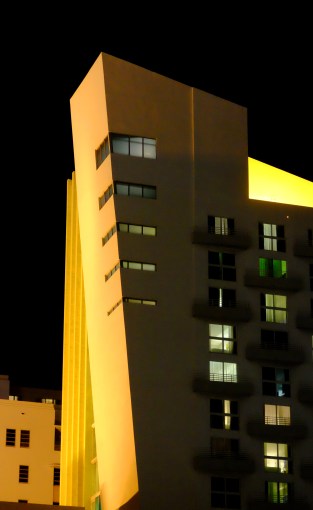
Why Creative Abstract Design is an experimental and conceptual style, why the bracket and design principles are open ended and some of the usual principles of design do not suffice, and why color is very useful but not mandatory
It cannot be emphasized enough that the approach I have been arguing for in earlier posts is a very free style of making art, but that it also requires lots of decisions and effort to create order. It is an open-ended art form, which only exists to the extent that the photographer personalizes and works out the immediate bracket, place, and message/series discussed in the last post.
It is also obviously an extremely experimental style. Even with the strongest most specific definition of place and message/series the artist should want to play around with the possibilities in the immediate bracket and this constant exploration is a large part of how the photographer works out their art. No matter how specified the art may become, it always remains creatively speculative, especially relative to more traditional approaches.
Moreover, the usual rules of design are not the basis for the understanding of creative order we are talking about here. They need not be ignored but they are not a starting point. The law of thirds, receding lines, rule of odds, frame within frame, golden ratio, or any other cookbook-like rule for symmetry or color theory or composition will not be sufficient in and of themselves for the photographer in this style. First, because the artist must decide for themselves how to organize the design aspects in a way that makes sense to their understanding of order—and any compositional principle could be chosen and used but need not be–and no conventional art rules per se will solve the key problem of design order for this art. Second, because this style is always dealing with actual found objects in the world and these objects have an intrinsic form and complexity which does not allow any simple reduction to conventional design categories. When one does talk about such principles for this style, they are more general ways of thinking about how to make these personal design order decisions, they do not in a standard method way solve the problem of creative order and abstraction, which is too potentially varied to allow such rules in any simple form.
I also believe that color is a key design element that should be included in the mix of artistic aspects considered. Can great Creative Abstract Design photographs be made without color? Of course. Some of the classic precursor images by artists such as Aaron Siskind who greatly influenced this style were not made in color and there are no set rules on this. However, the removing of color completely and only using black and white, while it does in some ways simplify design order, i.e., without color the process is perhaps easier with fewer variables and form and geometry can be emphasized, is in my view opposed to the effort by the artist to create order from complexity and to comprehend the found objects which include color. Not including color is understandable in earlier precursors of this style, but not in the current period. Let us instead embrace the complexity of the Creative Abstract Design’s full potential and work out design orders that include color to some degree or another.
The concept of weight of found objects not symmetry—this approach is not that of conventional design rules and theory
It is crucial for the reader to fully understand the design concepts this new approach is offering here are meant to be and have proven useful for creatively working with actual found objects in the world. It is possible to come up with amazingly complex and intriguing compositional concepts regarding form and color and apply them purely in a studio setting to paint on canvas and historically there are countless artists who have made entire careers as the followers of one such elaborate design theory or another. But while this is a style that sets few limits on the fine art photographer’s free subjectivity, it is, nonetheless, a style about found objects and any design principles need to work in the field.
While the handbook-like principles of design are usually not very helpful in this style, we have found that one concept which is found certainly in higher level fine art approaches and that can be substituted for such principles regarding the form and placement of objects in the bracket is the idea of what we call weight. Weight, as we use the term, is how much space these objects take up or demand in the bracket not based on size alone but also the visual connotation broadly understood of the found object. In considering the relationship of objects, the concept of weight has proven time and time again to be in practice an extremely crucial idea. This is because weight takes seriously the intrinsic character of the actual found objects and their relationship to other objects in the bracket.
The problem with some traditional rules of design is that they assume that, so to speak, all objects are equal within the bracket and can be understood simply in terms of obvious size and perspectival concerns, and it is a matter of the placement of these objects in a kind of grid that matters. For the painter who can bend reality at will, this may be a reasonable starting assumption, but not for the confrontation with actual found objects, which is the starting point for the Creative Abstract Design photographer. Also, in the style, perspective does not provide a guide for placement. The more important problem is that in practice even objects of the same size within the bracket can carry vastly different weight. A rock and a feather or a rock and a mountain even of the same dimensions in the image do not have the same presence in the photo, they carry into the bracket this broader actual significance of their object-ness. They interact with their surrounding space and objects in very different ways. If you will, the one as lightly as a feather and the other with the force of a rock or in the other example, the one with the weight of a mountain; the other with the weight of a pebble. This is one meaning of the idea of weight.
However, it is not weight simply in a more literal but expanded sense. The color of the object and its intensity, the psychological meaning of the object, the kind of surface it involves, its lighting, how it has come to be placed in relation to other objects whether at ease or in conflict, all these things effect the weight of the objects within the bracket. So the key to using the idea of weight is to break with all the simple design order principles and instead really consider the weight of the actual found objects in the bracket and how they affect one’s own view and the bracket as such. As suggested, weight is how much space these objects take up or demand in the bracket in a broader and deeper sense. It is this relation of weight that must be balanced or imbalanced in terms of the artist’s goals—but this is only really possible if one opens up the question and leaves behind the simple set rules which in practice only work if one creates an overly narrow design order not necessarily based on the actual full potential of the immediate bracket, place, and message/series.
Three principles of color in Creative Abstract Design photography
Color theory is also an area that often can be made extremely elaborate and which design theory has suggested all kinds of highly advanced conceptual frameworks that have been taken up by artists. As with other aesthetic principles very interesting works of art have been made by artists enthralled by one advanced color theory or another. However, as with the concept of weight, our goal here is not to add another such advanced theory, but instead to suggest a starting point for dealing conceptually with actual found objects in the field—objects which are not as bendable to the artist’s color palette as those created by the painter, nor reducible to one or another abstract color principle.
As with weight, the concept of color in this approach is not the usual design theory, for example, of ratios of blue to red to yellow or even the more advanced ideas of colors with shape experimented with by the Bauhaus ultimately to no avail or agreement, or a theory of color palette. No, the concept of color is much more open-ended and instead simply tries to create a general starting point for conceptualizing the kind of relationship of color to the bracket encountered in objects in the field. Over time in this style of photography, it has become clear that there are three general kinds of color schemes in the bracket, and although these color schemes lend themselves to infinite variety, they are a useful initial guide to thinking about color as it plays out in terms of the specific palettes of film, digital cameras, and later editing of images.
Monochromatic color
The first color scheme is the monochromatic, and this is often found in certain images especially made in nature settings in winter with the absence of colorful flora, in scenes emphasizing geology, sometimes in settings where mist and diffuse atmospheric effects are important, and in images of certain kinds of buildings and structures in urban settings. The monochromatic involves photographs where a set of relatively unsaturated shades of color are found. Obviously, black and white images would also fall into this category and any image can be interestingly approached from this starting point.


The main point of the monochromatic in the bracket is that given this lack of more powerful color one of two qualities tends to take center stage. Either various forms or shapes become the overriding factor in the image or the subtle play of color becomes important where the lack of bright or much color makes what little color is present relevant albeit in most instances as an additional lesser aspect to form. In both cases though, and they often overlap, color as such ceases to carry as it often does a great deal of weight in the image.
Now these types of monochromatic color photos lend themselves to a kind of stark bracket and often carry a certain harsher emotional feel, but despite these strengths, the absence of color as a central element also potentially leads to a lack of complexity, and the mastery of complexity can be a real strength of the design aspect of the approach for which we are arguing. Sometimes, this lack of complexity of color can be made up for by greater complexity or intricacy in terms of form-fullness, tonality, or very interesting subtle color relations can even be emphasized. Bold monochromatic contrasts are also possible. As part of an overall range of brackets in which various color relations are played with, the monochromatic adds variety and suggests distinctive possibilities for working in terms of abstract design or can itself become an area of specialization in black and white work.
Swath of Color
The second form of color relation found in this style I call the swath of color. In these kinds of brackets one contends with an image in which one particular color carries great weight and really differentiates itself from the surrounding more muted color or monochromatic background.
Different swaths of color, different sizes of the objects of color, different levels of saturation, expectedness or unexpectedness of the presence of the swath of color, different ways in which the swath of color manifests itself—as a single object or several, all effect the possibilities of the bracket. There can also be not one, but several competing swaths of color in the bracket. Then the interactions of these colors between each other and the surrounding more muted background become crucial. Also, the form of the found objects with the color—how they carry the color and the kind of color–can obviously carry great weight and effect the bracket. Consider, for example, if the blue is a women’s dress or the yellow a piece of gold. In each case color, per se, cannot be separated from the unique characteristics of the object.


Brackets of objects involving a swath of color are often much easier for the photographer to abstract—they start out from the beginning, if you will, already delineated in the scene and the photographer will have to decide whether to embrace or downplay this inherent abstraction. The obvious weight within the scene carried by the swath of color, often in ways completely out of alignment with the actual size of the objects involved, will need to be considered. At what point does this weight work in relation to the surrounding objects and the scale fit the color and the interactions involved? Photos of swaths of color cover a very wide array of possibilities as they are color as an abstract design aspect among other competing design elements—consider, for example, a bright orange flower against grey granite rock or a swath of yellow graffiti on a brown city wall. In each case, what is the weight of the swath of color relative to the background and what is the power of the background? Is the granite rock angular and with force occupying the space so that it seems at war with the flower or accommodating and is the surface of the rock simple or complex in form? Is the brown city wall of a new building and freshly painted or a decaying abandoned and falling down building each with its own unique aesthetic qualities? Swaths of color present many possibilities and questions for the Creative Abstract Design photographer.
Color Field or All Over Bracket
The line between swath of color and what we call color field is not a hard and fast one, but at some point the extent of the bracket where color is present as a design aspect crosses over to being a majority of the image design. This is the most sophisticated and complex from a color design standpoint bracket, though this does not inherently in and of itself make the image more powerful.
These images have a great many colors or at least quite prominent colors interacting in the image throughout the space. Think if you are looking for a compositional referent point Theo Van Doesburg’s Simultaneous Composition 1929 with just its swath of blue and yellow versus his all over color earlier Composition XX 1920 where the entire scene is filled with interacting blue, red, and yellow rectangles or Mondrian’s Tableau II, with Red, Black, Yellow, Blue, and Light Blue 1921 with its swath of color rectangles located tpwards the edges of what we would call the bracket versus Wassily Kandinsky’s Composition VII 1913 with intricate color across the entire bracket in complex connections or a work like Jackson Pollocks Mural 1943 with its intricate and complex use of color.
Understanding where this somewhat arbitrary line between swath and color field is located in design terms for photography is important because the key design questions also begin to change between these two kinds of images. I will have much more to say about this in later posts but here it suffices simply if one begins to recognize that such a distinction actually exists.


Bold Color
The third general color scheme often encountered in the bracket I call bold color. Bold color involves a scene in which the intense interplay of more highly saturated color is the important point and color for the sake of color is the main component. This kind of scene, which is most often found in and lends itself to urban settings or quite saturated nature flora, can involve a range from a powerful, but still relatively controlled interplay of color to the most surreal and excessive color relations sometimes found in artificial city light at night, found objects with very manmade colors with intentionally bold schemes, or fall foilage and certain florals . There is nothing the least bit shy about these colors in the bracket —they are inherently narcissistic and demand attention.


The strength of these kinds of found objects is that they lend themselves to various degrees of color abstraction and when order is achieved can be very beautiful or vigorous. The weakness is that if more extreme colors in the bracket are not sufficiently mastered in design terms the image can spin out of control. The use of bold color with even a very saturated palette is entirely consistent with Creative Abstract Design photography, but not when it is used in a shallow way that does not fit the found objects.
The emphasis on form or color
Having said all this about color and color is potentially a key aspect of the Creative Abstract Design style, it must also be acknowledged that there is another general dimension to this topic for the bracket. In the style, there is often a choice to be made between creating images, to adopt a shorthand here, with Cezanne like qualities of an emphasis on structure, shape, and form or with a Monet like emphasis on color. We are obviously not saying one should necessarily make images derivative of 19th century painters or Impressionist images, per se—but simply that some artists are, for personal reasons, attracted in varying degrees to one of these general possibilities, like Cezanne more to form or like Monet more to color.
Every Creative Abstract Design photographer has to work out exactly how much they want to make color or form the main or a main concern in particular cases or in general in their art. Brackets can be readily chosen by the artist in which the characteristics of the found objects are more defined by form or color or a combination thereof and any immediate bracket can be organized in a variety of different combinations of these elements. Color even bold color can be used to emphasize form or form can be reduced to a secondary aspect of color in a particular work or throughout a series of work. This is the case even if, as we have argued, color remains still a component of the approach. The interaction of color and form is always a key question in the style.
In an upcoming post we will begin to consider in greater detail the significance from a design perspective of the found object which is so important and a key aspect of this style of fine art photography.
If you are interested in this approach be sure to view my Kindle book Creative Abstract Design: Towards A New Modernist Photography for the 21st Century available on Amazon.