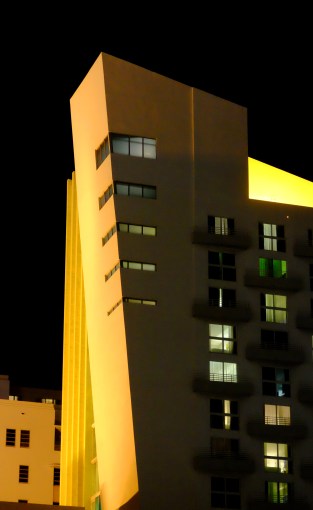
In earlier posts, we discussed several key aspects of the Creative Abstract Design style of photography I am arguing for on this site. The idea of the bracket as a space where the aesthetic play of objects can occur and the importance of the deeper principle of weight and overall color forms is crucial for the style and also for fine art photography more generally. If you haven’t read these earlier posts yet, you may want to do so at some point to get fully up to speed. Here, I want to discuss a third key concept, which is the significance and understanding of the found object.


The Creative Abstract Design style involves found objects in the field, and for this reason the process of abstraction and creation of design order is always fundamentally distinctive from other fine arts, which can create entirely artificial worlds. This process of abstraction can be pushed quite far, but it always retains an actual link to the objects of specific places and settings. I believe this to be, in fact, a great strength not weakness of the style. The artist is always, in making their work, potentially having fascinating moments in actual locations and the experience of the objects of place is heightened by the creative activity.


This is also why the artist should not narrow their range of experiences too much in terms of the found object simply in an effort to meet some overdone standard of pure abstraction and design order. If the Creative Abstract Design photographer must choose between having more interesting experiences of place and in so doing dealing with more complex immediate brackets and having the most easily made into abstract design brackets of much less interesting found objects—the artist should, at least to an extent consistent with their message/series, choose the former.


The whole point is that the photographer should be constantly searching and discovering fascinating elements and then attempting to turn them into new works of art however easy or difficult that may be. Over time, a certain inner list of the kinds of items in particular places will occur, but this only leads to a more advanced ability to search even further and to a deeper level in a setting. To some extent, this style of photography becomes really interesting at the point that the objects of place are known enough to reflect on each visit how the place has changed or remained the same.
One of the exciting aspects of this style is that even more predictable locations are actually changing tremendously from photo visit to photo visit, and over time the photographer, as they come to know specific locations, is able to recognize and appreciate these changes. A natural setting or city street is to an extent a different setting every time one ventures into it.

The other important point is that even among relatively similar settings of found objects no two photographers in this style will often find the same brackets to photograph or articulate the same relations between objects in the setting. My wife, who has traveled with me on photo expeditions for years and is an extremely talented photographer, who also does work in this style and has played a very important and crucial part in the approach of Creative Abstract Design, and I regularly find ourselves making art in the same locations from year to year—yet in many cases we do not choose the same objects to photograph, and when we do they usually appear in very different ways. Unlike with conventional photography, this is because of the vast freedom of the bracket that is found in the Creative Abstract Design style, and the fact that each artist must forge their own creative order.
The unique meanings and design qualities of found objects
Overall, the found objects must be analyzed or intuitively comprehended in terms of their meanings and design qualities. As suggested in earlier posts, weight and color are key starting points for this process, but the totality of their characteristics and being need to be considered beyond simply these categories. Here, one is really reaching a point where the design order becomes about the unique qualities of very specific objects and the inner relationship established by the artist and significance of these items for them.
An example will help to clarify this point. Consider a very powerful stark rock and a rushing cascade. Now, obviously the bracket here includes the elements of rock and water. It is possible to right away define these objects. There can be no real debate that the rock has a sense of solidity and power, an unmoving and rigid quality, a certain hardness, and that the color, if it is grey granite, has a certain strong but not saturated quality. The water, on the other hand, carries with it movement and is constantly changing, has a certain softness and yielding quality, and if it is in this case a solid blue, a strong degree of color. Hence, the starting point to considering the immediate bracket could be the interplay of these contrasting qualities which can be analyzed in terms of weight and color and the specificity of the found items. There are, of course, many specific characteristics to these substances, the few aspects mentioned are merely a starting point, and the photographer must consider these qualities in choosing the particular way they express them.
The problem, however, is that the qualities of these objects do not depend on simply these inherent forms they carry as objects, but also on the subjectivity and self of the artist. Thus, the Creative Abstract Design photographer must consider not only these inherent elements, but more importantly the ways in which they understand these objects and what they mean in terms of their definition of the immediate bracket, place, and message/series.
One photographer might, for example, warm up to the above scene, it might express a kind of strong interaction of things they find appealing. Another might not be moved at all, or might experience it contemplatively, while another as a war between contrasting objects. The above example suggests, however, a few aspects to be considered— hardness versus softness, fixedness versus change, color versus shape, the artist’s affinity or non-affinity, attraction or repulsion to particular found objects.

Another key dimension to found objects that must be acknowledged from a design standpoint is shape. But again, the usual design categories of circle, square, rectangle, triangle, etc. although of some value, are not a useful starting point. Instead, the very specific form-fullness of the found objects within the bracket must be considered. Shape and form are evaluated as they express the inherent qualities of the found object, or in other words the Creative Abstract Design photographer must always consider what the shape and form is expressing in terms of the totality of the items considered. A circular shape does not in design terms mean the same thing if it is a rock or a curve of the body, if it is an architectural structure or a light.
The design aspects of found objects includes, however, not simply their inherent qualities, shape and form, color and weight, and the artist’s subjectivity—all of these qualities in turn potentially change and are redefined by the placement of the articles within the bracket, their interactions within the bracket, and the selection of the immediate bracket in terms of the inclusion/exclusion of specific elements.
The criteria for when the found object is fine art and when the found object is derivative
Since the Creative Abstract Design artist is always photographing very specific found objects, it raises the important question of when is the image simply derivative. What we mean by this is readily shown if one considers several objects in an urban setting. Many of the best potential images in such places are created from the found objects that have been produced by earlier creative workers. Take, for example, a wall that contains graffiti or a decorative storefront made up of artificial light at night or an urban backyard.
Now, of course, the photographer in taking an image of these scenes is making a new work—even the most conventional architectural photographer taking a building front is doing this, as the photo of the façade is not the architecture, but a particular created image of it. However, what I am asking here is at what point does the photo have distinctive enough qualities on its own to reach what might be termed the threshold of fine art and leave the space of simply documentation or decoration.
To return to the earlier examples, the graffiti photo becomes a unique work of art at that point where the color and forms have been redeployed in terms of a new design order. Let us consider, for instance, a wall where there are three different colored graffiti scrawls, two partly present flyers, and a red brick surface that is weathered. If the photographer simply takes a photo of the overall wall where they choose a frame that doesn’t miss anything that may or may not be an interesting photo, but it is documentary and derivative. If they zero in and pick one item—one colored graffiti or flyer, while if sufficiently abstracted and with a strong enough emphasis in terms of their own message/series it might rise above being derivative; it is still on its own terms at least initially derivative. It is only not documentation in Creative Abstract Design terms at that point at which these found objects are transformed into elements within the bracket that are then organized in a distinctive personal design order—at the point at which a bracket is chosen that combines and includes these qualities in a new creative way. It then ceases to be simply about a particular earlier aesthetic trace and becomes also about how the elements involved can be used to make an interesting new artistic bracket. The photographer choosing to use a bit of the green graffiti with the blue and white piece of one of the flyers and a particular part of the red wall or photographing the general relationship between the details with unique light effects that partially decontextualize the objects or choosing part of the graffiti in a way that creates an interesting combination of color and form. These items may be more or less recognizable in their original form, but a new art work from these found objects has been made.


With the decorative light a similar issue is found. Let us say a restaurant has used neon lights in the storefront and a picture of those lights leads to an aesthetic effect. While a photographic work it remains simply documentary to the extent that one is only showing a decorative light design in the way it was originally intended as a pleasing window display. It becomes fine art at that point at which through abstraction it combines with other aspects of the bracket or is extracted out of its immediate context into a new image.

The flattening of the bracket to specify interactions of color and form
While there are circumstances in which depth can play a part in Creative Abstract Design photographs at a basic conceptual level the style, as we’ve suggested, tends to think about space in a flattened manner and certainly not in terms of the perspectival concerns of classical landscape art and photography. In the flat plane of the bracket– and as an actual photo it is after all a flat space–the found objects are rearranged and played with by the photographer.

In conceiving of the bracket in this compressed manner, it becomes possible to more fully abstract, play with, and create a design order especially in terms of the varying weight, color, and form of the objects involved.
In practice, what this means is that understanding the bracket in this way the artist can take a real inventory of these objects removed from their initial context. The great abstract expressionist photographer who is a precursor of this style practiced here emphasized this point a lot in their key writings. He suggested that the photographic artist is able to create a new order through the containing power of a clearly delineated flat rectangular space from which these objects can temporarily not escape back into the more classic principle of perspectival art. He referred to this resulting process as the “drama of objects” a particularly powerful turn of phrase that captures the essence of the idea. bounds. There is only the drama of the objects, and you are watching.” In my view though while an excellent starting point this is mostly, but not entirely the case. Conceptually, the photographer does initially tend to flatten the space in coming to comprehend the found objects, but sometimes while not embracing or using traditional perspective there may or may not be three dimensional interactions which the Creative Abstract Design photographer chooses to elaborate or minimize.
Also, in my view, there is a certain degree of autonomy to these elements which makes it not so simple a matter of constructing an inner meaning from them and removing them from their setting. On the contrary, the complexity of the immediate bracket and of the place and message/series brackets means that this style is less self- referential in theory in many ways than in Siskind’s view. In this style, we are expanding the immediate bracket even more, adding more complexity and dimensions to the problem, adding color, and making more of an open question the relation between objects and the artist. This process, however, almost always begins with a flattening and decontextualizing of the space, which is then maintained or decreased to a degree in terms of design order and expressive issues.
I will have much more to say about these unique qualities of the found object in later posts. If you are interested in the importance of these concepts or the style championed be sure to consider my new Kindle book reprint Creative Abstract Design: Towards a New Modernist Photography for the 21st Century now available on Amazon.